
See below for how “Don’t Tell Me,” came to be, on very short notice ~
Don’t tell me what to think—I can’t;
My mind can think for only me;
Don’t tell me what to do—I won’t;
My body is my employee—
My only one, through every breath,
Through every dance, from birth till death.
Don’t tell me what to say or not,
My voice must voice my mind’s true thought,
The thought on which my life depends,
My only life, so dearly bought;
Without my speech, my mind is mute,
I’ll die unheard, leaf to root.
Don’t draw your lines to fence me in;
Don’t force me where to stay or go;
My course I set as I deem best,
My destination, mine to know,
Around the world or round the bend,
My choice to start, my right to end.
Don’t tell me what to trade with whom,
Or dictate price for beets or bread;
The dearness of my coin in hand
Is mine to weigh for boots or bed;
What rate for labor, mine to ask;
What labor hired, mine to task.
Don’t tell me whom to love or loathe,
Or whom to praise or whom to rake;
The measure of my friends and foes
Is something only I can take;
I’ll walk with whom I’ll walk today;
For good or ill, I’ll find my way.
Don’t brandish now your gun or blade,
In threat of harm against my will,
As surely as my lungs must breathe,
I’ll think my thoughts, I’ll speak my fill;
I’ll do as I think best; I vow
That, by my life, to none I’ll bow.
~ Quent Cordair
2026
How this poem came to be: “Last night, the poet Quent Cordair did the impossible. I was rushing to release the inaugural newsletter for our new organisation, the Australian Centre for Objectivism, and asked Quent to write a commission poem. He came back eight hours later (1am in his timezone) with a brilliant six-stanza poem that matched our February theme, “The Evil of the Initiation of Force”. This gives me great confidence; with allies of his calibre, our success is assured. Thank you, Quent.” ~ Maxim Bishev
Tag: objectivism
Part III of IDOLATRY is now available!

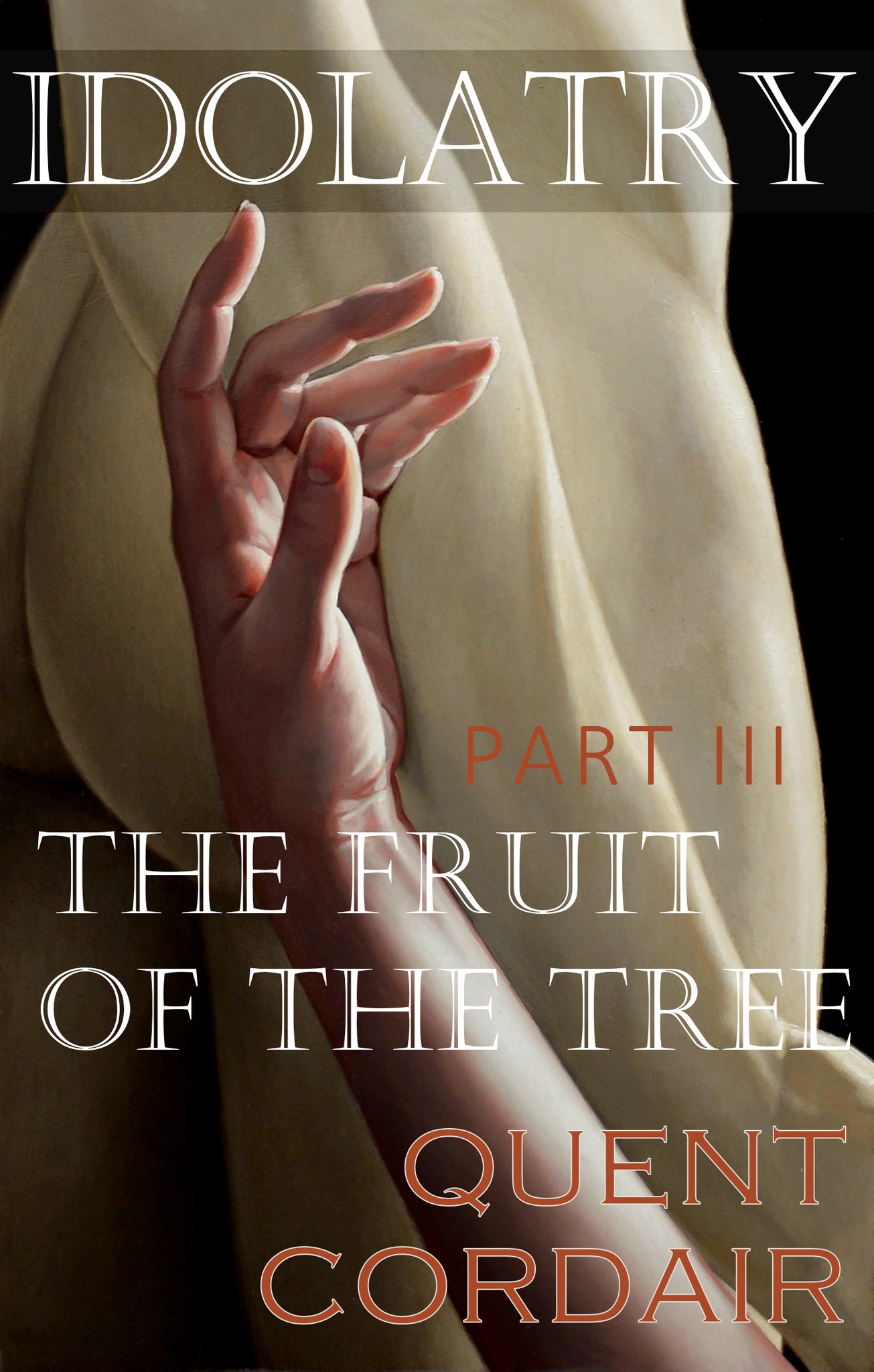
Journalist Paige Keller returns to Aurum Valley to begin uncovering the secrets of the valley’s history, to the displeasure of those determined to keep those secrets hidden. She discovers the story of Aurelia’s founder, an ambitious young man who returned to the valley to make his home and fortune there, and of a fearless native girl who left her tribe to follow a stranger to a new and unknown life. She discovers the history of a disillusioned immigrant who fled his family’s faith to establish a new religion in the valley, despite suffering a broken moral compass.
In the present, a talented young actress is lured into the lair of a predacious Hollywood producer; the leader of the local church is drawn into a secretive organization with influence deep in the halls of power; a weary environmentalist is inspired to greater sacrifice by an impassioned teenager; a jaded professor is challenged by a precocious new student; an aging sculptress strives to finish her magnum opus while still alive and able; the heir of the valley’s founding family begins building where neither the Church nor the environmentalists want anyone to build—on a hill they all hold sacred.
The Fruit of the Tree is Part III of the acclaimed Idolatry saga, the story of a wealthy young heir and a devout Christian girl who find themselves at the heart of the struggle for the soul of Western Civilization.
NOW AVAILABLE IN PAPERBACK AND KINDLE EDITIONS …
SIGNED AND PERSONALIZED PAPERBACK COPIES NOW AVAILABLE …
~ THE EARLY REVIEWS ARE IN! ~
5.0 out of 5 stars ~ A modern romanticist epic dramatising the struggle for western civilization
“Superb third entry in this saga, making for a modern romanticist epic on a par with Victor Hugo and Ayn Rand. The author carefully weaves multiple plot threads and larger than life characters centred on a fictional American town – it’s heritage torn between a fundamentalist offshoot of Mormonism, the rational, life affirming spirit of capitalist entrepreneurs, and post modern leftist sects – encapsulating the two and a half thousand year struggle for the soul of what is now termed western civilisation.” ~ Matthew Humphreys
5.0 out of 5 stars ~ A stunning achievement and beautifully written
“Quent Cordair has a great talent for creating compelling characters. Some inspire profound admiration so rarely found in modern literature, others so odious their evil seemed to drip from the page. The Idolatry series is an achievement in laying bare the historical battle between good and evil. Don’t miss all three in the series and you will, like me, be waiting for #4.” ~ John Cerasuolo
5.0 out of 5 stars ~ A tour de force!
“Well worth the wait! The depth and breadth of Cordair’s writing is impressive switching seamlessly between the past and present and with vivid descriptions advancing the story along.
I highly recommend The Fruit of the Tree! I also recommend first reading or re-reading Genesis (book 1) and A New Eden (book 2) in this 5-part saga. There are echoes in The Fruit of the Tree of Genesis and also The Fruit of the Tree follows on directly from A New Eden. I look forward to reading part 4 of the saga which is titled The Tongue of the Serpent.” ~ Godfrey Joseph
5.0 out of 5 stars ~ A Philosophical Epic Gains Momentum
“The Fruit of the Tree, the third book in Quent Cordair’s Idolatry series, drew me even deeper into his centuries-spanning philosophical war between good and evil—between lovers of life and those who seek to destroy that love. This volume brings together questions left unanswered in books one and two and moves the epic conflict closer to a climax. If you don’t fall in love with Paige by the end of this book, you definitely need to “examine your premises.” The main characters introduced in book two are more fully developed, and multiple side stories emerge, all contributing to the central theme. Aurum Valley is becoming ground zero in this epic battle of opposing philosophical forces. Now I have to wait in eager anticipation for book four.” ~ Steve McBride
5.0 out of 5 stars ~ Beautiful Writing
“This book brought me straight back into Aurum Valley with its history, mystery, and slow-building tension that this series does so well. Please know that reading the earlier books in the Idolatry series is needed to fully appreciate The Fruit of the Tree. The writing is gorgeous and super descriptive. The way each storyline unfolds makes the whole valley feel alive in a way that’s almost eerie. Paige’s character arc really stood out to me this time. Her drive to dig up the truth, even when it puts her in danger, gives the book a steady heartbeat to follow.
“I also loved how the valley’s history slowly shows up through the story itself. The way those pieces surface adds intrigue to everything happening now, especially with the Church, the founding family, and all the behind-the-scenes power plays. Every character has something going on, and even the smaller side stories end up factoring in a huge way.
“By the end, the mystery is thicker than ever, now that I’ve got some answers to questions from the previous book (A New Eden) and even more new questions. It’s one of those books where I finished a chapter and just sat there like… okay, now I need the next part immediately. I’m invested in this series and can’t wait for the next one!” ~ Kim Bromberek
 As It Should Be