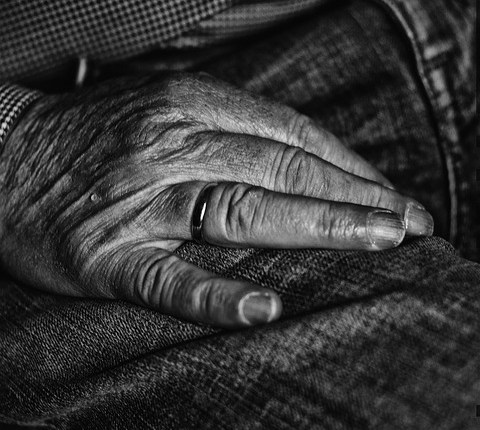
Individualism

Individualism

A good blog post by the Hyacinth Girl, in which I’m quoted. It opens,

“Scrolling through my Twitter feed the other day, I came across this picture posted by the History in Pictures account. It’s a box of wedding rings found by liberators at a concentration camp in 1945. Each ring belonged to a person, and each person disappeared into the camps….”

http://www.thehyacinthgrrrl.com/2017/12/individualism.html


None more wondrous or impressive . . .

None more wondrous or impressive . . .

Never has there been a god or goddess more wondrous or impressive than the wondrous and impressive beings after whom they were modeled. Man is quite incapable, thank goodness, of inventing an entity more remarkable or exalted than himself. The gods are nothing more, nothing less, than creations molded from Man’s own characteristics, his own virtues and vices, his own qualities reconfigured and remodeled in effort to answer his own hopes, longings, fears, and uncertainties. The gods are, at best, reflections of Man’s own essence, distillations of his own actuality, glorifications of his own potential. At the end of the creative day, however, though he may fervently wish or believe otherwise, no creation of Man can be Man’s master. Though the creator may bow and worship the creation, the creation is not, and could never be, the creator’s superior. The creation can be nothing more than the creator’s servant, a means to his end. If the creator chooses to kneel before his creation, he is free to do so, but he cannot blame the creation for staring back at him in mute wonder.

~ Quent Cordair, on Idolatry

The Idolatry story opens in the twilight of the Roman Empire. As the darkening forces of mysticism descend on Western Civilization, the daughter of itinerant traders is falling fast for a local boy—the apprentice and adopted son of a sculptor. The old master, concerned for the boy’s future, recalls his years as a younger man in bustling Alexandria, where he had found the love of his life before having to flee the threat of religious persecution. Now, having finally rebuilt his life and career in a village far away, an enemy from the past reappears, threatening all he holds dear….

Parts I & II of Idolatry, *Genesis* and *A New Eden*, are now available in ebook, paperback, and audiobook editions on Amazon. Part III is being written.


The Dark Deeds of Night

The Dark Deeds of Night

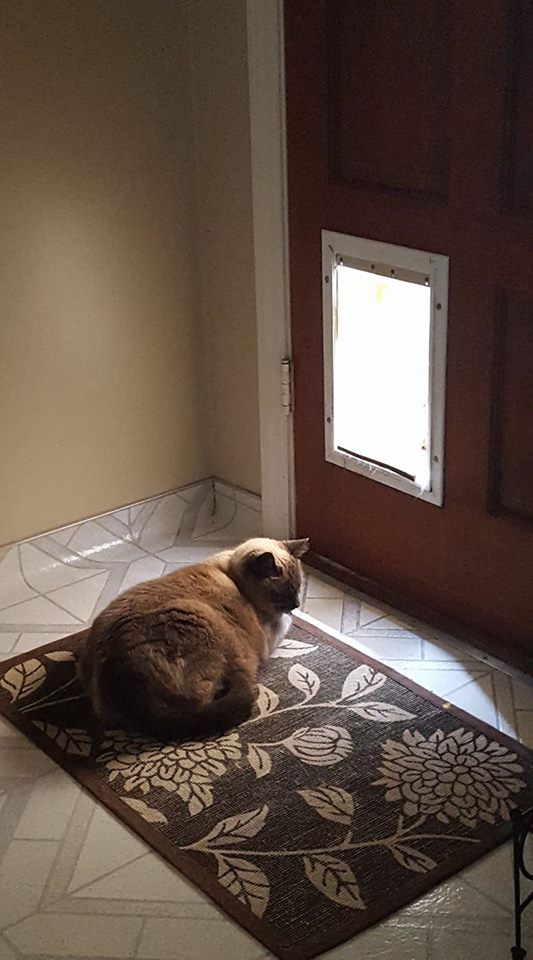
The rain has come. The rain stopped before. It may stop again. It may not. Until the glooming wetness passes, it will weigh upon me like sackcloth as I wait here at the portal for the return of the bright and warming god. For what else can one do but show a constant and enduring faith? If a small rodent appears, I will sacrifice it so that the sun will reappear more quickly. The sun is pleased by offerings of dead rodents, a truth my ancestors have known and passed down through the ages. Until a worthy sacrifice appears, the emptiness in my soul may be assuaged now and again with communion from the human-priest’s hand, morsels of sustaining manna for which I will cry out when he passes, shuffling by, he and his pale assurances of sunny morrows and an endless cycle of seasons. But what can he and his kind know of the sacrifices required of me and my kind to keep it all turning, of the taking of life necessary for life’s return? Dutifully, quietly, I will do again what my kind have always done, knowing that the human-priests will raise their faces to the sun when the sun comes again, giving no thought or thanks to those willing to do the dark deeds of night that make the day possible. Yes, the sun will come again. Of this I will make sure. ~ Le Chat

Alive

Alive

At our local bar, sitting next to two 70-somethings who’ve met here by happenstance. He was here when we came in, wears a medical bracelet. The seat next to him is the only seat available to her. And so she sits. He’s having a glass of wine. She orders a beer. It would be rude not to introduce themselves. They ask the questions, get to know each other. Only bits and pieces of the conversation can be heard, but the emotional undertones are timeless. He used to be in a band? What instrument? Saxophone? Her husband used to play! He taught her, but she was never very good…. Heart rates rise as hopes rise. The cautious, cautious optimism. By the time he leaves, she’s revealed where and when he might run into her again. When he walks out the door, his back is a little straighter, head a little higher. She takes her time, finishes her beer.

***

Thank you!

Thank you!

Thanks so much for each and every review! “A screenplay jihadists will hate and civilized people will love…. Set in Chicago during the holiday season, the story involves a conflict between Husam, a young Muslim man who takes Islam seriously, and his younger brother Jasim. The conflict escalates after Husam is handed a heavy bag by a bearded man and gets on a bus heading downtown…. How is the conflict resolved? In an immensely satisfying way—as fans of Cordair’s work would expect.” — Daniel Wahl, The Objective Standard.  https://www.amazon.com/dp/B00R8QP8NI

Eclipsed

Eclipsed

Eclipsed

Their dance was interrupted
As the handmaid slipped between,
With silent glide, as was her way,
Her creases pressed and clean—
“Pray suffer but a moment, ma’am,
Then I’ll be on my way;
You’ll have him back for seven years
Through each and every day.”
With graceful curiosity
The wife let go his hand
And marveled as his aura’s light
Around the maid did band.
Her blackness moved against his white,
The stars and planets awed,
Till wife in wondering twilight thought
Her wisdom might be flawed.
But promise made the maid did keep,
Her turn but for a spell;
A flash of brilliant wedding ring
Told Earth that all was well.

***
Copyright 2017, Quent Cordair.

I used to live in Charlottesville

I used to live in Charlottesville

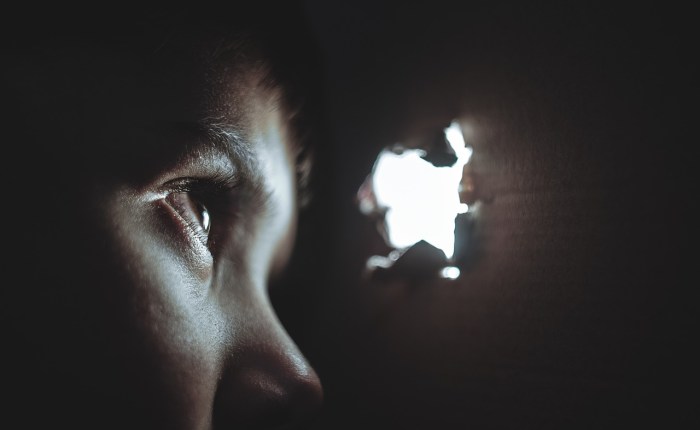
I used to live in Charlottesville. Today I’m reminded of this: “All of humanity was reforming into packs, each pack for protection against the others, with the barking and baying growing louder as the collectives circled, sizing each other up. Disassociated individuals were viewed warily, with suspicion, branded as a danger. If you aren’t for us, you must be against us. Choose! In the press and on social media, behind the slanted headlines and sniping innuendo, the snapping and snarling were intensifying, the pretense of civility crumbling as the packs grew and merged, the smaller groups absorbed into the larger. The collectives were circling and coalescing, testing and reaffirming loyalties, choosing leaders, sharpening claws, baring teeth. Self-loathing and fear were turned and projected outward. Homo sapiens was becoming increasingly less sapiens, devolving, seemingly doomed to another round of sub-civilized, tribalistic brutality. How dark would the next darkness be? How long would it last? How red would run the streets? How unexpected the particular details, the extent of the carnage?”

~ from Chapter 15 of A New Eden, Part II of IDOLATRY, from a darker moment of Professor Harris Grant’s thoughts as he sits on the edge of the cliff overlooking Aurum Valley.