Salute to Hongkongers

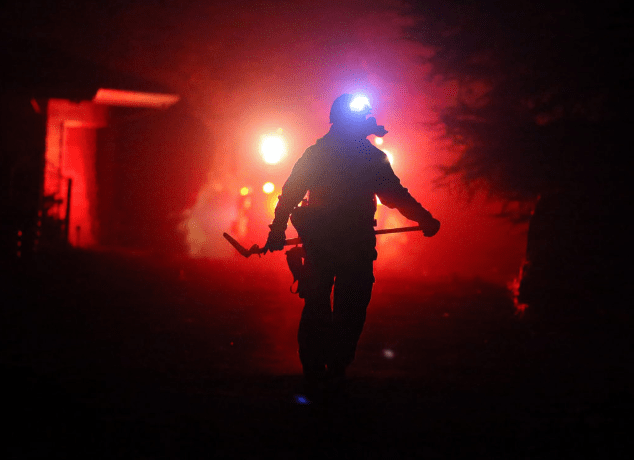
Friends, please feel free to share the above image widely, particularly with any and all who may have Hong Kong connections. May the photograph and the words help strengthen the resolve of those willing to stand for their freedom, for their lives, against the march of tyranny.

Award-winning photograph by P H Yang, used with permission.

#HongKong #Hongkonger #Freedom #Individualism #FreedomHK #rights #FreeHongKong
#NoChinaExtradition #hongkongprotests #StandWithHongKong

My favorite “illegal-immigrant” story is FREE today ~

My favorite “illegal-immigrant” story is FREE today ~

A fan favorite, and certainly one of mine, “The Seduction of Santi Banesh”  is free to download today through Monday midnight Pacific (10/21/2019).

Santi’s story: “While traveling to America with her family for the first time, the daughter of a third-world diplomat makes a life-altering decision during a layover in San Francisco.” From the reviews: “… a delicious pleasure to read … a joyous journey of discovery … The ending is one of the most perfect I’ve ever encountered, summing up the benevolence of the whole experience with its simplicity and inevitability.”

“The Seduction of Santi Banesh” was first published in the 1994 summer issue of the Atlantean Press Review. The Kindle edition of the story is FREE TODAY through Monday midnight for U.S. readers. To download your complimentary copy, visit https://www.amazon.com/dp/B006596U8G . Thanks for everyone’s generous reviews — they’re greatly appreciated.

Enjoy!

~ Quent Cordair

p.s. Say ‘hi’ to Santi’s little brother for me. Love that kid.

Castle Walls

Castle Walls


Castle Walls

Peace, peace, but not a moment to be found,

No closet or armoire is free from the sound,

For now your enemies live here in your head—

Sitting at your table—

Waiting in your bed—

And who is to blame for their being inside?

What use, castle walls,

When the gate’s open wide?

~ Quent Cordair

***********
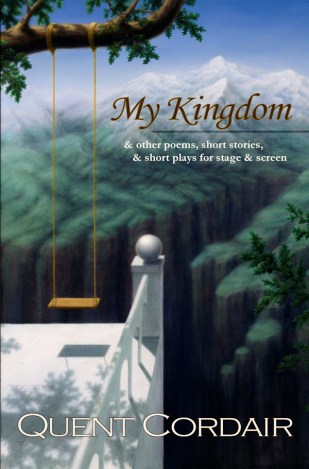
“Castle Walls” is from the My Kingdom collection of poems, short stories, & short plays for stage & screen, now available in paperback and Kindle editions.


My Kingdom ~ free Kindle copies for review

My Kingdom ~ free Kindle copies for review

My Kingdom for a review — literally! Today I’m giving away three Kindle-edition copies of My Kingdom in exchange for short reviews. Even just a sentence or two will do. Average reading time: four hours. Your mileage may vary.

Sample snippets of reader-reviews of My Kingdom posted so far, to whet your appetite:

“…a highly recommended soul-quencher.”

“…an homage to the mind of man.”

“…a mind-engaging symphony of deliverance … Quent Cordair presents a benevolent universe and a gallery of heroic individuals fighting for an ideal life. Ultimately, it is a love story. It is real and, if you reach for it, it can be yours.”

“There is a refreshing benevolence in all of Cordair’s work, not sugar-coated, that is captivating, profound…”

Be one of the first three to volunteer in the comments, with the understood commitment that you’ll do your best to post a review on Amazon within the next 14 days, and a copy is yours!

Thank you!

Preview all the posted reviews of My Kingdom, now in paperback and Kindle editions, on Amazon.

Quent Cordair’s My Kingdom is a select collection of poems, short stories, flash-fiction works, studies and musings from the author’s notebooks, short plays for stage and screen, special scenes from the Idolatry, and for the first time in print, the acclaimed short story “The Match,” together with the short screenplays “Mujahid” and “At Home with Heather James.”

“For me, an artist’s studio can be as fascinating a place to visit as the gallery or museum in which his finished work is displayed. Practice sketches, studies, exercises, works in progress, casual pieces created solely for the artist’s own pleasure—while perhaps never intended for sale or public exposure—can be as wondrous and interesting as finished works that have earned the artist’s signature. Over the years, I’ve been encouraged by fans to publish the writer’s equivalent of such studio work—written sketches, descriptions, dialogues, style and period exercises, scene and character studies, musings, selections from works in progress. This collection includes, in addition to an assortment of such, a variety of shorter, finished works, from poems to plays, dating to before publication of the Lunch Break collection. To one and all, welcome again to my world, my way. Welcome to My Kingdom.” ~ Quent Cordair


“He completes me”

—said the Sea of the Moon.

The Moon, he did reply:

“As she flows to my push,
As she ebbs to my pull,
May we dance ever thus,
Till the dawn rises full.
While the day may me hide
While she sails her ships wide,
She’ll yet move to my shift,
I’ll yet draw to her drift,
Drawing closer and down,
Till Time forces relent—
And into her wet gown
I plunge shimmering,
spent.”

 ~ Quent Cordair


******************

“He Completes Me” is from MY KINGDOM, Quent Cordair’s 5-STAR collection of poetry, short stories, and short plays for stage and screen. What readers are saying ~

“…a highly recommended soul-quencher.”

“…an homage to the mind of man.”

“…a mind-engaging symphony of deliverance, composed by a brilliant mind who has most definitely lived and loved. Quent Cordair presents a benevolent universe and a gallery of heroic individuals fighting for an ideal life. Ultimately, it is a love story. It is real and, if you reach for it, it can be yours.”

“There is a refreshing benevolence in all of Cordair’s work, not sugar-coated, that is captivating, profound…”

MY KINGDOM is now available in paperback and Kindle ebook (only $2.99) from Amazon @ https://www.amazon.com/dp/B07SVGNQG6

For this Father’s Day ~

For this Father’s Day ~

For this Father’s Day, a favorite passage from Genesis, Part I of Idolatry, the meeting of the sculptor Apollonius and the boy Myron ~

***********

… It was just so, late one evening. He had worked through the night and day prior on another mausoleum frieze, trying to reach a state of exhaustion and numbness that would overwhelm him enough that he could sleep. In the scene, the mourners surrounding the dead body were distraught; all were focused on the deceased except one figure – a man who had turned to look out at the viewer, searching for an unfindable answer. His face was sorrow incarnate.

Apollonius sat on the floor, his head fallen, his body bowed over and so tired that he could no longer lift his arms, and still his soul hurt too much to rest. The tears began to fall, making silent splashes in the marble dust on the floor, as the night’s last candle burned low.

He sniffed – and heard an echoing sniff, disembodied, not his own. He sniffed again. Another small sniffle answered. He opened his eyes to find a toddler sitting on the floor next to him, gazing up at the funereal scene, tears rolling down the urchin’s dust-caked cheeks. He was begrimed but beautiful, with auburn-bronze curls and hazel eyes flecked with umber and gold. The bedraggled cloth draping his little body was a dirty rectangle of coarse, undyed wool, a hole cut out for the head. Of the pins meant to hold the sides of the cloth together, one had torn loose, the other had ripped nearly away and was hanging by only a few threads.

Seeing Apollonius’s distraught face, the boy began crying all the harder. The two looked at each other and cried on, emptying the depths of their grief until Apollonius could no longer bear the pathos, such a pitiable outpouring from such a flawless creature who surely could know so little yet of pain, a mere child with the prospect of a lifetime of joys before him. The scene had become an absurd injustice, and from somewhere in Apollonius’s soul, from a place he had thought had long died, something rose through the thick sadness, bubbling upwards to escape –

He laughed.

It was an agonized laugh, a pained laugh, but a laugh nonetheless, and the boy, in turn, laughed at the sound of it. Apollonius put his arm around the boy and pulled him close. The two cried and laughed together until the candle flickered its last, until the forlorn faces on the frieze had vanished into the blanketing darkness, until sleep overcame the night….

******
To enjoy more of the Idolatry story ~ https://www.amazon.com/Genesis-Idolatry-Book-Q…/…/B00MUWOWDW

For this “Earth Day”

For this “Earth Day”

For this “Earth Day,” a passage from A New Eden, Part II of Idolatry. The year, 1852:

***
…When the day ended and darkness fell, Thomas walked away from the wagon train and into the wilderness, headed south with a vague notion of going to Mexico, with nothing on his person but the clothes on his back, the knife on his belt and, in his satchel, a flint, a small package of hardtack and dried beef, and his father’s edition of Lyell’s Principles of Geology.

Through the night and the next day he walked, seeing not a trace of humanity and scant signs of wildlife. The next evening he found himself standing atop a high hill overlooking a desolate valley.

Close to the west, a range of snow-tipped mountains rose like the ramparts of a citadel. At the valley’s south end lay a shallow marsh fed by snowmelt, mostly dried up from the long summer’s heat, miles of alkali flats left in the ebb. The mountain shadows were growing long across the valley floor. The desert heat was cooling rapidly as the sky began to shift into the loveliest, most vivid palette he had ever seen—a parasol of pastels over hills turning tangerine and deep saffron, the mountains tinted cornflower-blue and violet. He gathered enough deadfall and brush for a small fire and, after a light supper, nestled down beside a low wall of stone he built to hold the fire’s heat. After reading a chapter of Lyell by firelight, he slept, with moonlight for his blanket and a stone for his pillow.

He spent three days alone on the summit—reading, thinking, remembering his father, considering his future, weighing his options, taking in the view. On the fourth morning, the fire had gone cold in the night. The scant supply of brush and wood on the summit was exhausted, as was his meager store of food. But looking out over the valley, he judged it to be the most beautiful place he had ever seen. The assessment was, he knew, due in no small part to the fact that he, Thomas Thornton Hale, was the only person in the valley. He had never enjoyed the luxury of having even the smallest corner of earth he could call his own. He and his father had shared the bedroom of their two-room cabin. On the wagon trail, a person had to venture over a hill or around a stand of trees for any privacy from fellow travelers. He looked around him that morning, from the rocks at his feet to the far horizons, and he said—“My hill.” He said it to himself and to the land and to the sky—“My hill. My valley. My world.”

There was no one there to dispute his claim. And so it was so.

He wanted to memorialize the moment and the place, but there was nothing resembling a flag or stake to plant in the ground. He had burned all of the loose wood. Other than rocks and scattered scrub, the only thing of substance left nearby was a barely living, severely torqued tree—an ancient bristlecone pine, wide at its base, with stunted arms and spindly fingers reaching for the sky, a few clusters of needles still surviving in the branches, roots clinging tenaciously to the back side of the summit. Other than a narrow strip of bark running up one side, the twisted torso and limbs were all but denuded, the exposed wood blanched white and polished smooth and hard as stone by the elements. Thomas carved his initials and the date into the trunk with his knife.

Having left his mark, he wanted something of the place to take with him. Over the past days, he had noticed a long thin vein of reddish quartz, not more than a few inches wide, cutting diagonally across the summit like a scar, exposed between the upended layers of porphyritic strata. Scattered pieces of the quartz had broken off at the surface. He chose one the size of a dove’s egg and put it in his pocket.

He was ready to rejoin civilization. There were things he needed to do before he could return to the valley….

*****

Read more…